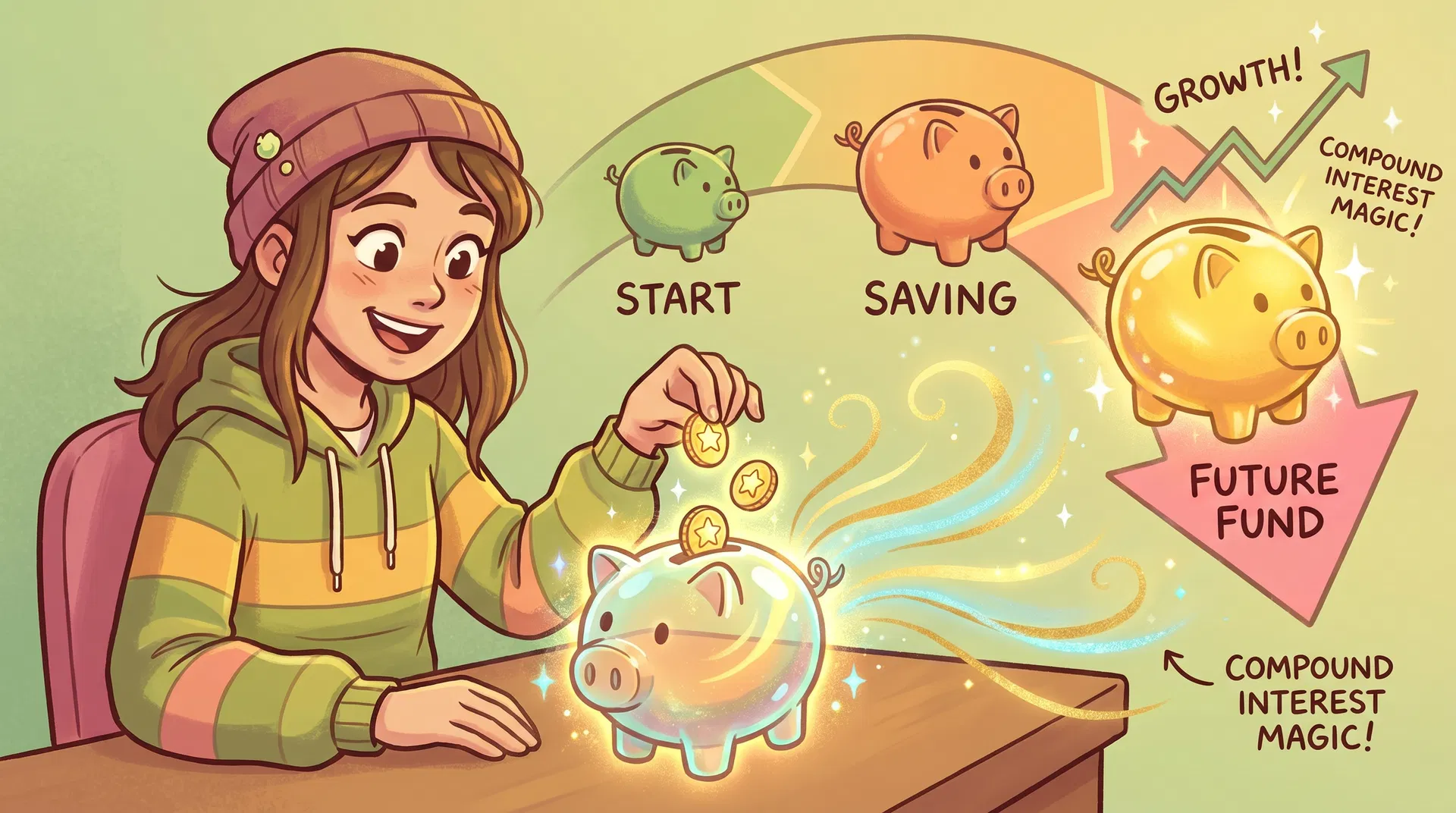
The Magic of Saving: Why Your Future Self Will Thank You
Ever notice how a small snowball can turn into a giant snowball when you roll it down a snowy hill? Saving money works kind of the same way—the earlier you start, the more time your money has to grow.
What Does Saving Actually Mean?
Saving is simply putting money aside instead of spending it right away. It sounds simple, but it's one of the most powerful financial habits you can develop. When you save, you're telling your future self, "I'm taking care of you!" Whether it's $5 from your allowance or money from a part-time job, every dollar saved is a dollar working for your future.
Why Should You Care About Saving?
Think about something you really want but can't afford right now—maybe a new gaming console, a trip with friends, or college tuition someday. Saving is the bridge between wanting something and actually getting it. Without saving, you're stuck wishing. With saving, you're building.
Saving also gives you something called financial security. This means having money set aside for unexpected situations. Maybe your phone breaks, or you want to take a spontaneous trip. When you have savings, you have options instead of panic.
The Compound Effect
Here's where it gets exciting. When you put money in a savings account, banks often pay you interest—that's free money just for letting them hold your cash! It's like the bank is saying "thanks for saving with us" by giving you extra money. Over time, you earn interest on your interest, which means your money grows faster and faster. This is called compound interest, and it's one of the most powerful forces in personal finance.
Getting Started
You don't need a huge amount to start saving. Even $10 a month adds up. The key is consistency. Set a goal—maybe you want to save $100 by summer—and work backwards. If summer is 5 months away, that's $20 per month. Suddenly, it feels doable!
Real Talk
Saving isn't about never having fun or never buying things you want. It's about balance. You can enjoy money today AND save for tomorrow. The trick is being intentional about your choices. When you skip the $5 coffee and put that money in savings instead, you're not being boring—you're being strategic.
Your future self is already grateful. Start today.
Written by: ZalaSmart Team
Teaching children and youth the essential life skill of financial literacy.